

If you have rare whiskey sittingon a shelf, the first question you need to answer is a simple one: does this bottle actually have secondary market value?
The honest answer is that most bottles don’t. But the ones that do the truly allocated, limited, and collectible releases are actively sought by buyers who know exactly what they’re looking for. Some bottles appreciate significantly over retail. A hand ful have set auction records. And a lot of people who have them have no idea.
This guide breaks down the most valuable whiskey categories and specific bottles that serious collectors and buyers are pursuing right now in 2026. We also cover what actually drives value, so you can evaluate any bottle you own with a clear framework instead of guesswork.
We’ve been buying rare whiskey from collectors across the Midwest for years. Everything in this guide reflectsreal market activity, not speculation or generic bottle lists copied from aranking article.
What Actually Makes a Whiskey Bottle Valuable
Most people who contact us lead with the age statement on their bottle. Age matters but it’s one factor amongseveral, and it’s not always the most important one. Here’s how serious buyers think about value.
Allocation and Scarcity
A bottle is only as valuable asthe gap between supply and demand. The most collectible whiskeys in the U.S. are “allocated” meaning distilleries produce a fixed, small quantity anddistribute them through a lottery or waitlist system. Most consumers never get access at retail. That imbalance is what creates a secondary market.
Scarcity from a closed distillery works differently but produces the same effect. When a distillery stops producing, every bottle in existence is part of a finite,non-replenishable supply. Demand from collectors who understand that scarcitytends to stay strong.
Brand Pedigree and Collector Reputation
Not all rare whiskey carries equal weight with buyers. Collectors follow specific distilleries and brands the way investors follow established companies. Names like Van Winkle, Buffalo Trace Antique Collection, Macallan, and Yamazaki have decades of auction history and collector trust behind them. That reputation is what supports strong secondary market demand.
An unknown small-batch whiskey might be genuinely rare in the sense that few bottles were produced but without an established collector following and auction history, the secondary market for it is thin. Buyers are not there.
Bottle Condition
Condition has an outsized effecton what a buyer will offer. The same bottle in pristine condition versus compromised condition can be valued very differently by the same buyer. Here’swhat serious buyers look at:
• Fill level: The whiskey should sit well into theneck. A lower fill level raises questions about storage integrity and reduces collector appeal.
• Label condition: Clean, undamaged, unfadedlabels matter significantly. Staining, tearing, or peeling will reduce what abuyer offers.
• Original packaging: The box, tube, or case that came with the bottle is important to collectors. A bottle missing its originalpackaging can lose a meaningful portion of its secondary market value.
• Capsule and seal integrity: An intact, undamaged capsule confirms the bottle has never been opened. For most serious buyers,this is non-negotiable.
Production Details That Signal Value
Certain designations on a labeltell an experienced buyer a great deal about a bottle’s collectibility beforethey even look it up:
• Single cask or single barrel designation
• Cask strength or barrel proof uncut and unfiltered
• Limited edition or numbered release
• Vintage year or specific distillation date
• Private label or retailer-specific bottlings made inextremely limited quantities
Worth knowing: A higher age statement on its own doesnot guarantee secondary market value. A well-aged bottle from an obscure,uncollected distillery may be worth far less than a younger limited releasefrom a brand with deep collector demand.
Most Valuable American Bourbon Bottles in 2026
American bourbon has cement edits place alongside Scotch as a serious collector category. The January 2026 Sotheby’s “Great American Whiskey Collection” one of the most valuable single-owner American whiskey collections ever offered at auction made clear that certain American bottles have moved into legitimate collector asset territory. Here’s what buyers are actively seeking.
Pappy Van Winkle Family Reser
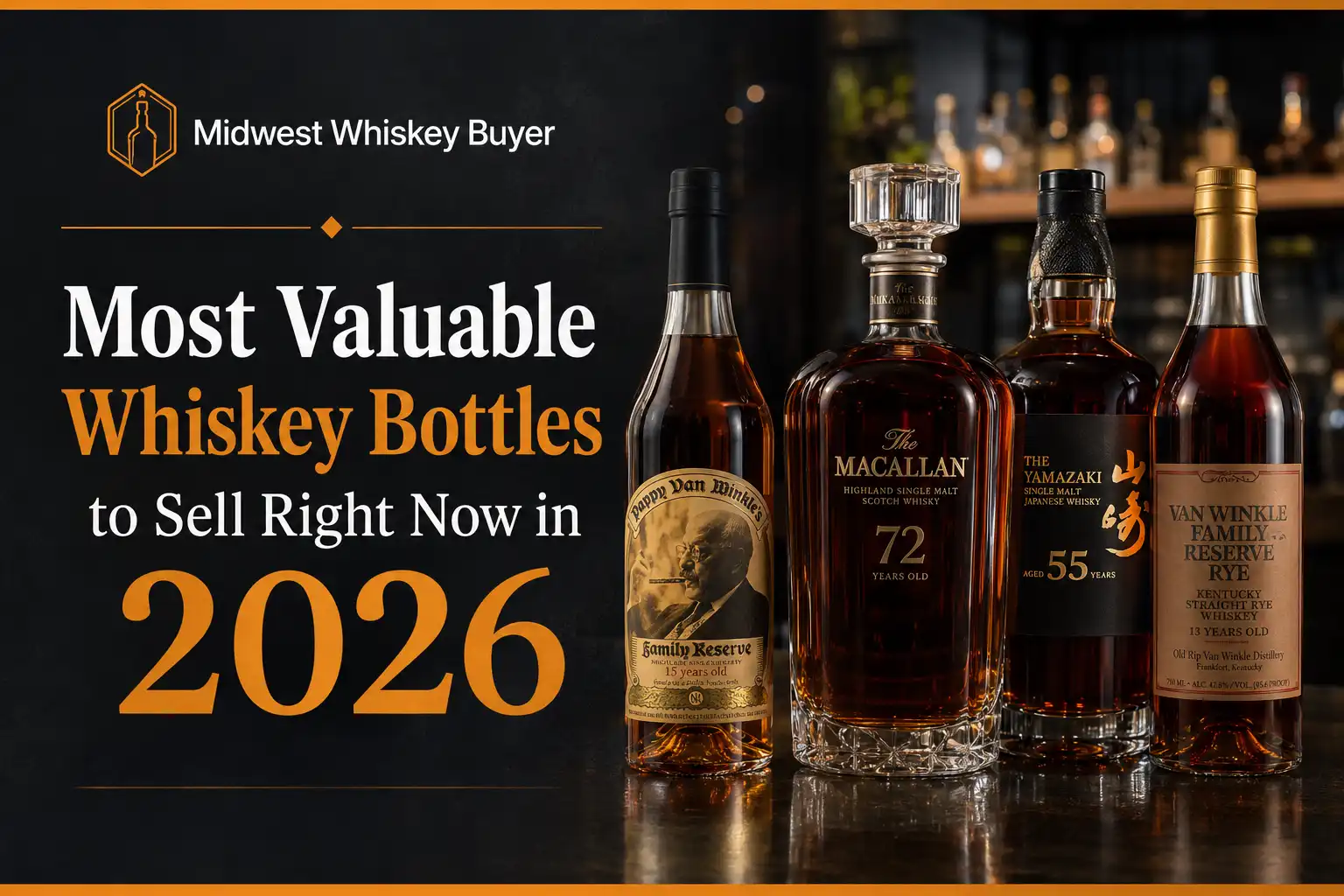
No name in American whiskey commands more secondary market attention than Van Winkle. The entire line up 10, 12, 15, 20, and 23 Year is consistently sought. Annual production remains extremely small. Demand is substantial and sustained. The gap between retailand secondary market reflects that imbalance every year.
Private label Van Winklebottlings made for specific retailers in extremely limited quantities occupy acategory of their own. These were produced in such small numbers that manynever appeared at public auction before the Sotheby’s 2026 sale. If you have aVan Winkle with a retailer name on the label, get it properly evaluated beforemaking any decisions about it.
Buffalo Trace Antique Collection (BTAC)
The BTAC is one of the mostanticipated annual releases in American whiskey. It includes five bottles thatconsistently draw serious secondary market interest:
• George T. Stagg: an uncut, unfiltered barrel proof bourbon that typically draws the strongest interest in the collection
• William Larue Weller: A heated barrel proof bourbon with a dedicated and active collector following
• Eagle Rare 17-Year: A long-aged single barrel with consistent annual demand
• Thomas H. Handy Sazerac Rye: a barrel proof rye with legitimate collector credibility
• Sazerac 18-Year Rye: typically the rarest release inthe annual collection
Any sealed, intact BTAC bottlefrom any year is actively purchased by serious buyers. Earlier release yearscarry additional value for collectors building verticals of the collectionacross multiple years.
Old Fitzgerald Bottled-in-Bond Heritage Releases
Heaven Hill’s Old Fitzgerald heritage series has become one of the most consistently collected American whiskeys of the past decade. These semi-annual releases of straight wheat whiskey are allocated through state lottery systems and rarely appear on retail shelves. Earlier releases from the initial years of the series have built strong secondary market standing among collectors.
Michter’s Limited and Ultra-Premium Releases
Michter’s limited releases sit at the premium end of American whiskey collecting. The Celebration expression is produced in extremely small quantities and released infrequently. The 25-Year Bourbon is among the rarest annual American releases in production. Even the more accessible Michter’s 10-Year Single Barrel draws attention when found sealed and in good condition.
Other High-Value American Bottles Worth Evaluating
• Four Roses Limited Edition Small Batch and SingleBarrel annual releases
• Weller Full Proof, Weller Single Barrel, and WilliamLarue Weller
• Blanton’s Gold, Straight from the Barrel, and Blanton’sSpecial Reserve
• Elijah Craig Barrel Proof particularly earlier release years and single-digit batch numbers
• Wild Turkey Master’s Keep annual releases
• Parker’s Heritage Collection annual releases
Most Valuable Scotch Whiskey Bottles in 2026
Scotch has the deepest and most established collector market in the world. The category has more nuance in 2026 than in prior years not every bottle from a well-known distillery carries a meaningful premium. Understanding which bottles are genuinely sought versus which ones carry only name recognition is what separates accurate evaluation from wishful thinking.
Macallan: The Bottles That Still Command Serious Attention
The Macallan name carriesenormous weight, but the specific bottle matters more than the brand alone.Modern standard releases have softened in the secondary market since their peaka few years ago. The expressions that continue to draw serious collectorinterest are older and more limited:
• Macallan Fine & Rare vintage releases, particularlypre-2000 distillations
• Macallan 25-Year and 30-Year Sherry Oak in goodcondition with original packaging
• Macallan 18-Year annual releases from before 2018
• Special collaboration editions with documented auctionhistory and collector following
If you have a Macallan with avintage year on the label, an age statement of 18 or older, and its originalpackaging in good condition, it warrants a proper evaluation. Standard modernreleases without special designation rarely carry meaningful secondarypremiums.
Port Ellen: A Closed Distillery With Finite Remaining Stock
Port Ellen distillery closed in1983. The pre-closure releases particularly the Diageo annual Special Releases bottlings are among the most consistently sought Scotch bottles inthe collector market. Because no new old stock can ever be produced, each bottle that sells permanently removes one from a pool that will never grow. Collector demand for authenticated Port Ellen remains strong.
Brora — Same Story, Equally Serious Collector Following
Brora also closed in 1983. Its pre-closure stock has become increasingly rare as bottles sell and are consumed. Diageo Special Releases bottlings and credible independent bottle releases from the distillery’s operating years draw real interest from serious Scotch collectors who understand what the distillery’s closure means for long-term availability.
Springbank, GlenDronach, Bowmore, and Other Serious Collector Names
Beyond Macallan and the closed distilleries, several Scotch producers have built strong collector followings that translate into active secondary markets. Springbank’s 21-Year and Local Barley releases, Glen Dronach Parliament 21-Year and vintage single casks, and Bowmore’s older aged expressions all trade actively. These are not house hold names to casual drinkers, but within the collector community, they arewell-tracked and actively purchased.
Most Valuable Japanese Whiskey Bottles in 2026
Japanese whiskey has become one of the most globally competitive collector categories over the past decade.Supply is structurally limited in a way that cannot be quickly corrected aged Japanese whiskey cannot be produced on demand. International demand has accelerated faster than supply can respond, and that structural im balance supports a durable secondary market for the right bottles.
Yamazaki — Japan’s Most Recognized Collector Name
Suntory’s Yamazaki produces someof the most globally sought whiskey available. Limited annual releases particularly 18-Year, 25-Year, and distillery-exclusive editions trade at meaningful premiums on the secondary market. The rarest Yamazaki expressionshave appeared at major international auction houses alongside the most collectible Scotch and American whiskeys.
Even the more accessible Yamazaki 18-Year limited annual releases carry secondary market value when found sealed and in good condition. If you have a Yamazaki with an agestatement of 18 or older, it is worth evaluating.
Hibiki — The Blended Benchmark
Suntory’s Hibiki blende dexpressions are among the most consistently sought Japanese whiskey bottles inthe collector market. The 21-Year and 30-Year expressions draw strong interest.The 17-Year was discontinued, making existing sealed bottles collectible as aresult. Any sealed Hibiki 21 or older in good condition warrants a properevaluation from a buyer who tracks the Japanese whiskey secondary market.
Karuizawa — The Rarest Category in Japanese Whiskey
Karuizawa distillery closed in2000. Every bottle of Karuizawa that exists anywhere in the world is the total global supply. No new Karuizawa will ever be produced. This structural reality combined with the distillery’s reputation among serious collectors makes authenticated Karuizawa some of the most aggressively sought whiskey in the world.
Noh series bottles, caskstrength single casks, and distillery-specific releases have appeared at majorinternational auction houses achieving results that rival or exceed top Scotchand American whiskey. If you have a bottle of Karuizawa and are uncertain of its value, get it evaluated before doing anything else with it. This is a categorywhere sellers have significantly underestimated what they had.
Hanyu Ichiro’s Malt Card Series
The Hanyu Card Series a set of 54 single cask expressions from the closed Hanyu distillery, each labeled with a playing card design is among the most tracked and actively purchased Japanese whiskey sub-categories in the collector market. Individual card bottles carry serious secondary market interest. Complete or near-complete sets are considered among the most significant whiskey collector items in existence.
Bottles That Look Valuable But Usually Aren’t
This is where real knowledge matters. A lot of bottles look impressive age statements, “limited edition” language, fancy packaging without having genuine secondary market demand.Knowing the difference protects sellers from both unrealistic expectations andmissed opportunities on bottles that actually do have value.
• Mass-produced “premium” bourbons: Bottles widely available at retail without an allocation system behind them do not carry secondary market premiums, regardless of age statement or packaging design.
• Modern standard Macallan releases: The 12-Yearand 15-Year are produced at volume and widely available. Without a special designation, these trade at or near retail on the secondary market.
• Generic single malt Scotch from uncollecteddistilleries: Being a single malt and being aged does not create collector demand. Without brand pedigree and an established auction history, thesecondary market is thin.
• Commemorative decanters from the 1970s–1990s:These appear frequently at estate sales. Many are empty or near-empty. Even sealed examples rarely carry significant secondary market value unless they’refrom a specific brand with documented collector interest.
• Standard Japanese whisky expressions available atretail: Not all Japanese whisky is collectible. Regular expressions thatsit on store shelves without an allocation or limited-edition designation donot trade at meaningful premiums.
If You Think You Have Something Valuable What to Do Next
The worst thing a seller can dois guess. Secondary market values shift based on demand, condition matters more than most people expect, and certain bottles that look ordinary are surprisingly valuable while others that appear impressive carry no meaningful premium at all.
The right move is an evaluation from someone who actually tracks the secondary market not retail storepricing, not what you see on resale listings, and not what a generalist estate buyer tells you. Real secondary market value is determined by what serious,informed buyers are actively paying right now.
At Midwest Whiskey Buyer, we evaluate bottles based on current secondary market activity across active auction platforms and collector networks. We work with sellers of single bottles and full collections across Michigan, Ohio, Indiana, Illinois, Wisconsin,and the broader Midwest.
If you have a bottle from any category in this guide or you’re not sure whether what you have is worth evaluating reach out. Tell us the name, the expression, and the condition.We’ll give you a straight answer without pressure or obligation.


