

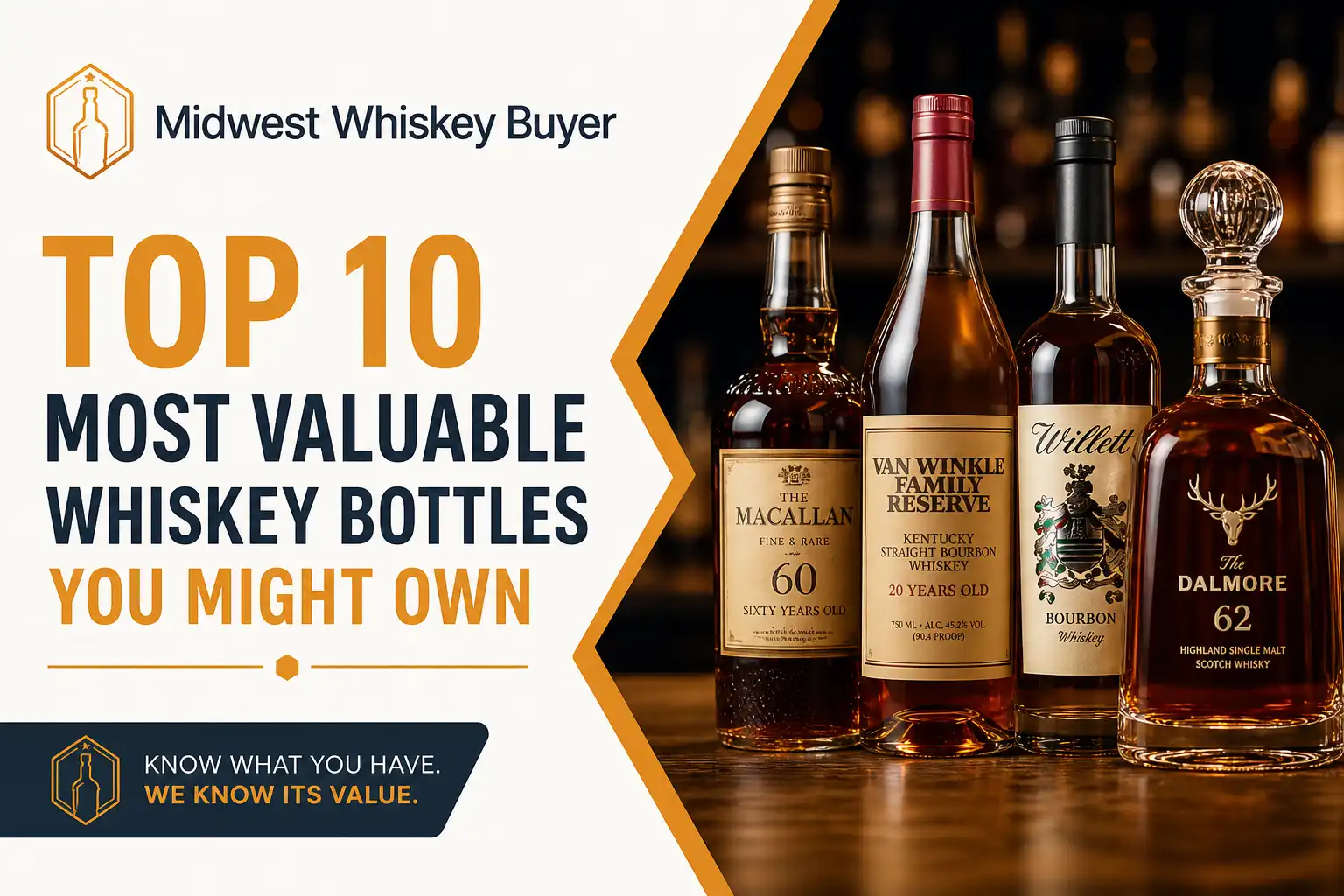
Some of the most valuable whiskey bottles people already own often without realizing it include older releases from Macallan, Pappy Van Winkle, Blanton’s, Yamazaki, and discontinued expressions from closed distilleries.
If your bottle is sealed, aged (15+ years), limited-release, or from a highly collectible distillery, it could realistically be worth anywhere in today’s U.S. collector market.
Quick Value Check Guide
Before you start imagining five-figure payouts, here’s how experienced buyers actually size up a bottle in under 60 seconds:
1. Age Statement (or Vintage Year)
Anything 15+ years old immediately enters collector territory. Pre-2000 bottlings? Even better. Dusty bottles (older labels, tax strips) often outperform modern releases.
2. Brand & Distillery Reputation
Names like Macallan, Pappy, Buffalo Trace Antique Collection, and closed distilleries (e.g., Stitzel-Weller era) carry serious weight.
3. Seal & Fill Level
A perfect seal is non-negotiable for top value. If the fill level has dropped significantly (below the shoulder), expect a price hit.
4. Original Packaging (Box / Tube / Case)
Collectors pay premiums for completeness. A Macallan 18 with the original box can fetch 20–40% more.
5. Rarity & Release Type
Single casks, limited editions, discontinued batches drive scarcity. Mass-produced bottles are rarely appreciated unless discontinued.
Reality Check:
A bottle doesn’t need to be “ancient” to be valuable. Some 2010s releases already trade above retail due to hype cycles.
Top 10 Most Valuable Whiskey Bottles You Might Own
1. Macallan 18 (Sherry Oak – Older Bottlings)
Why it’s valuable: Pre-2010 releases used different cask sourcing collectors to actively hunt these.
Who buys it: Scotch collectors, investors, international buyers.
Market insight: Older Macallan isn’t just consumed, it's
traded like an asset. Auction houses consistently show upward trends for vintage batches.
2. Pappy Van Winkle 15, 20, or 23 Year
Why it’s valuable: Limited annual releases + cult demand in the U.S.
Who buys it: Bourbon collectors, high-net-worth enthusiasts, gift buyers.
Real-world note: Secondary prices spike before holidays. The 23-year consistently leads resale value due to perceived prestige.
3. Blanton’s Single Barrel (Special Releases)
Why it’s valuable: Lettered toppers, Japan-exclusive editions, and discontinued labels.
Who buys it: Entry-level collectors and international buyers.
Insight: Full letter sets spelling “BLANTON’S” can command premiums beyond individual bottle value.
4. Yamazaki 18 Year
Why it’s valuable: Japanese whisky boom + limited aged stock.
Who buys it: Global collectors, especially U.S. and Asian markets.
Market behavior: Prices surged post-2018 and remain volatile but strong.
5. Buffalo Trace Antique Collection (BTAC)
Includes George T. Stagg, William Larue Weller, Eagle Rare 17
Why it’s valuable: Annual limited releases, high proof, strong reputation.
Insight: Demand exceeds supply every year; this isn’t slowing down.
6. Old Fitzgerald Bottled-in-Bond (Decanter Series)
Why it’s valuable: Unique decanters + age statements + limited drops.
Who buys it: Design-focused collectors + bourbon enthusiasts.
Real note: Packaging matters here more than most bottles.
7. Stitzel-Weller Era Bourbons (Pre-1992)
Why it’s valuable: Closed distillery + legendary production era.
Who buys it: Serious collectors and auction bidders.
Insight: Provenance (where it came from) significantly impacts price.
8. Hibiki 21 Year
Why it’s valuable: Limited aged Japanese stock + global demand.
Buyer type: High-end collectors, luxury gifting market.
Trend: Japanese whisky remains supply-constrained and prices stay elevated.
9. Springbank Limited Releases
Why it’s valuable: Small production, cult following.
Who buys it: Niche collectors who understand Scotch deeply.
Insight: Springbank is one of the few distilleries where demand feels “insider-driven.”
10. Dusty Bourbon Bottles (Pre-2000 Releases)
Why it’s valuable: Older production methods + discontinued profiles.
Examples: Early Wild Turkey, Old Crow, Heaven Hill.
Real-world behavior: These often come from estate sales or forgotten cabinets and sell quickly when authenticated.
4. The Hidden Value Most People Miss
Most valuable bottles don’t come from collectors, they come from ordinary households.
1. Inherited Liquor Cabinets
A grandfather’s unopened bourbon from the ’80s can easily be worth four figures today.
2. Old Gifts Never Opened
That “nice bottle” gifted 10 years ago might now be discontinued and scarce.
3. Basement or Bar Finds
Temperature fluctuations aside, many bottles survive well enough to retain value.
4. Restaurant or Bar Closures
Owners often liquidate inventory hidden gems show up here.
Key Insight:
People don’t realize the value because whiskey isn’t like watches or gold; it doesn't scream “expensive.” But in collector markets, scarcity beats appearance every time.
5. How to Sell Rare Whiskey in the USA
This is where most sellers lose money not because their bottle isn’t valuable, but because they sell it wrong.
Where You Can Sell
1. Whiskey Buyers
Professional buyers (like Midwest Whiskey Buyer) offer fast, compliant transactions without auction delays.
2. Auction Houses
Best for ultra-rare bottles. Downsides: fees, waiting periods, uncertain final price.
3. Private Collectors
Higher potential margins but requires trust, negotiation, and experience.
What Buyers Actually Look For
- Clear photos (front label, seal, fill level)
- Bottle history (where you got it)
- Storage condition
- Authenticity markers (tax strips, cork condition)
Mistakes to Avoid
1. Opening the Bottle “Just to Check”
You just killed 50–80% of the value.
2. Cleaning or Replacing Labels
Collectors want originality even imperfections.
3. Pricing Based on Google Listings
Asking price ≠ selling price. Real value comes from completed sales.
Where Midwest Whiskey Buyer Fits In
If you want a fast, legitimate, no-hassle sale, working with a dedicated U.S. buyer simplifies everything:
- No auction waiting
- No dealing with multiple bidders
It’s not about squeezing every dollar, it's about certainty and speed, which many sellers prioritize.
Conclusion
There’s a good chance the most valuable bottle you own isn’t the one you’d expect. It might be sitting unopened, overlooked, or even inherited without much context.
The difference between an ordinary bottle and a highly sought-after one isn’t always obvious but to the right buyer, it’s unmistakable.
If you’re even slightly unsure about a bottle’s value, it’s worth taking a closer look. The U.S. whiskey resale market is active, competitive, and continuing to grow.
Once you understand what you have, you’re in control whether that means holding it, insuring it, or selling it at the right time to the right buyer.


