
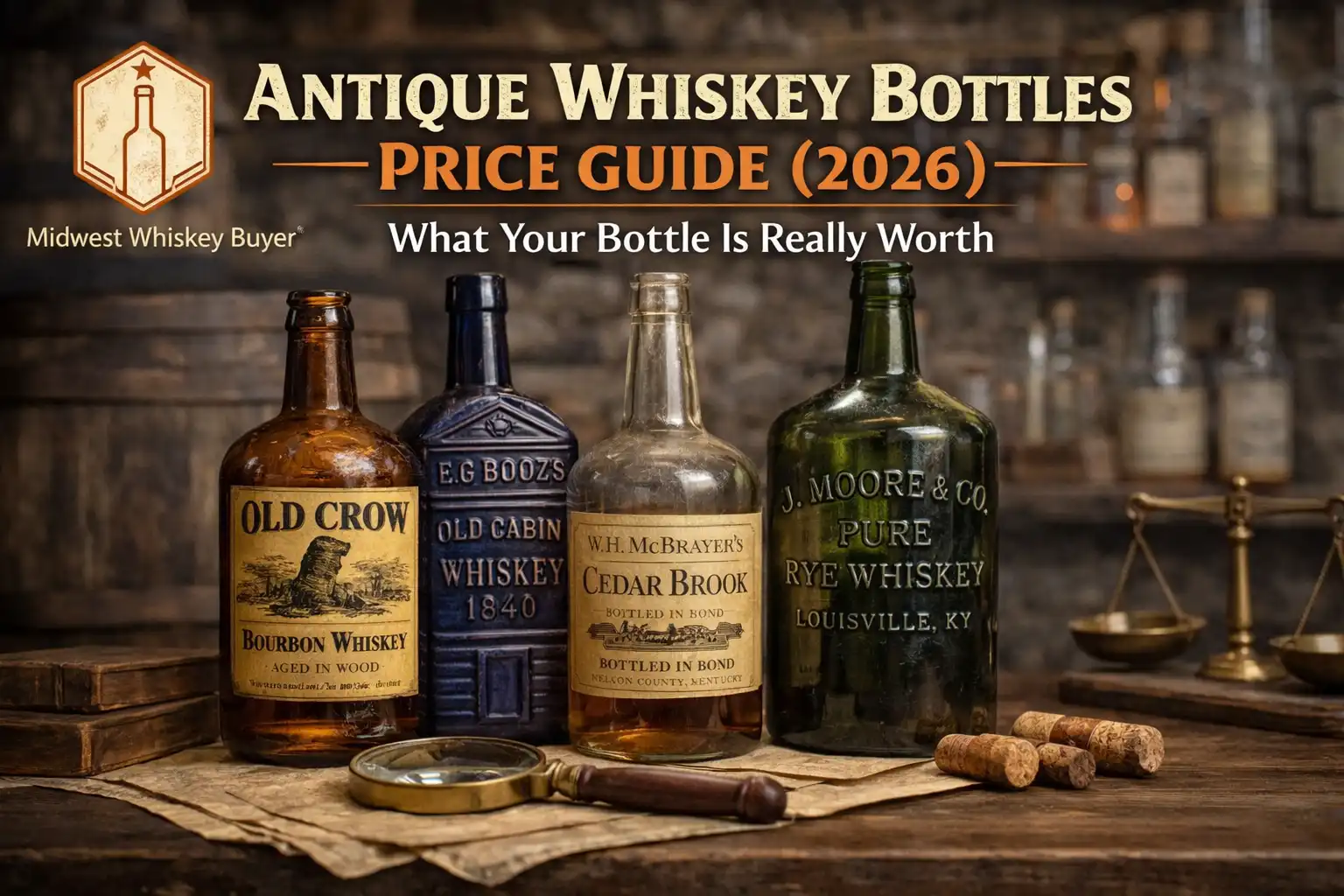
Antique whiskey bottles can range from $50 to over $10,000+, depending on rarity, age, brand, condition, and provenance. In my experience valuing collections across the U.S., most bottles fall between $200–$3,000, while truly rare releases from top distilleries can command auction-level prices.
What Determines the Value of Antique Whiskey Bottles?
When I appraise bottles for collectors or private sellers, I don’t just look at age, that's a common misconception. Value is driven by a combination of factors:
1. Brand & Distillery Reputation
Certain names consistently dominate the secondary market:
- Macallan especially older single malts
- Pappy Van Winkle cult-level demand
- Buffalo Trace highly collectible releases
Insight: Even a relatively newer bottle from a high-demand brand can outperform a 50-year-old unknown label.
2. Age vs. Release Era (Not the Same Thing)
A 12-year-old whiskey bottled in the 1980s can be more valuable than a 25-year-old bottle released recently.
- Pre-1990 bottlings → strong collector demand
- Pre-Prohibition (1920s or earlier) → extremely rare, but condition matters heavily
3. Condition (This is where most value is lost)
Here’s what I check first:
- Fill level (low fill = major value drop)
- Label condition (tears, fading reduce value)
- Seal integrity (opened bottles lose 30–80% value)
4. Rarity & Limited Releases
- Single barrel or discontinued editions
- Export-only bottles
- Distilleries that no longer exist
5. Provenance (Story Matters)
If you can prove:
- Original purchase receipt
- Stored properly (cool, dark conditions)
- Estate collection history
Value can increase significantly.
Antique Whiskey Bottle Price Guide (2026)
Based on recent private sales, auction results, and dealer transactions, here’s how antique whiskey bottles are actually priced in today’s market:
- Common vintage bottles (1970s–90s): Typically sell between $50 and $300, depending on condition and brand recognition. These are the most widely available and usually appeal to entry-level collectors.
- Mid-tier collectible bourbons: Expect values in the range of $300 to $1,500. Bottles from reputable distilleries with limited releases tend to fall into this category.
- Premium Scotch (such as Macallan): These bottles often command $1,500 to $5,000+, especially older single malts or discontinued expressions.
- Rare releases from Pappy Van Winkle: These are consistently in high demand, with prices ranging from $3,000 to $10,000+, depending on age, edition, and provenance.
- Pre-Prohibition bottles (pre-1920): These typically sell between $500 and $5,000+, though condition plays a massive role in determining final value.
- Ultra-rare auction bottles: Exceptional bottles with strong provenance or extreme rarity can reach anywhere from $10,000 to $50,000+, and in some cases, significantly higher.
Expert insight: In my experience, most sellers misjudge value by focusing only on age. In reality, brand, rarity, and condition consistently outperform age alone when it comes to actual sale prices.
How Buyers Actually Evaluate Your Bottle
Most sellers assume buyers care only about age. That’s not how serious collectors think.
Here’s what professional buyers (including those I’ve worked with in Texas, New York, and Chicago) focus on:
- Market demand trends (last 12 months)
- Auction comps (not retail guesses)
- Bottle variation (label, cork, packaging differences)
- Liquidity (how fast it can resell)
A bottle that sells quickly at $2,000 is often more valuable than one “worth” $3,000 but sits unsold.
Biggest Mistakes Sellers Make
After 12+ years in this space, I see the same errors repeatedly:
1. Pricing based on Google results
Most online listings are unsold prices — not real market value.
2. Ignoring condition issues
A slightly low fill or damaged label can cut value in half.
3. Trying to sell illegally
Selling whiskey in the USA is regulated. Many private sellers unknowingly violate state laws.
4. Selling to the first buyer
You should always compare offers, especially for premium bottles.
Selling Antique Whiskey in the USA (What You Need to Know)
If you're planning on selling whiskey in the USA, here’s the reality:
- Private sales laws vary by state
- Many transactions happen through licensed brokers or auction houses
- Major buyer hubs include:
- Whiskey buyers in Texas
- Collectors in New York
- High-end dealers in Chicago
Pro Tip: If you’re unsure about legality, work with a licensed intermediary — it protects both pricing and compliance.
Ready to Sell Your Whiskey Collection?
If you're holding onto old bottles, now is one of the strongest markets I’ve seen in years.
Here’s what I recommend:
- Get a professional valuation before listing
- Avoid pawn shops or generic resellers
- Work with specialists who understand collector demand
Whether you have one bottle or an entire cellar, the right buyer can make a massive difference.
Expert Tips to Maximize Your Bottle’s Value
- Store upright (never on its side like wine)
- Keep away from sunlight and heat
- Don’t clean or “restore” labels
- Document everything (photos, origin, purchase details)
Also read: where-to-sell-my-whiskey-in-2026
Also read: bourbon-oversupply
Also read: how-much-is-my-old-bourbon-worth
Tapped: sell-your-whiskey
Tapped: sell-your-bourbon


