

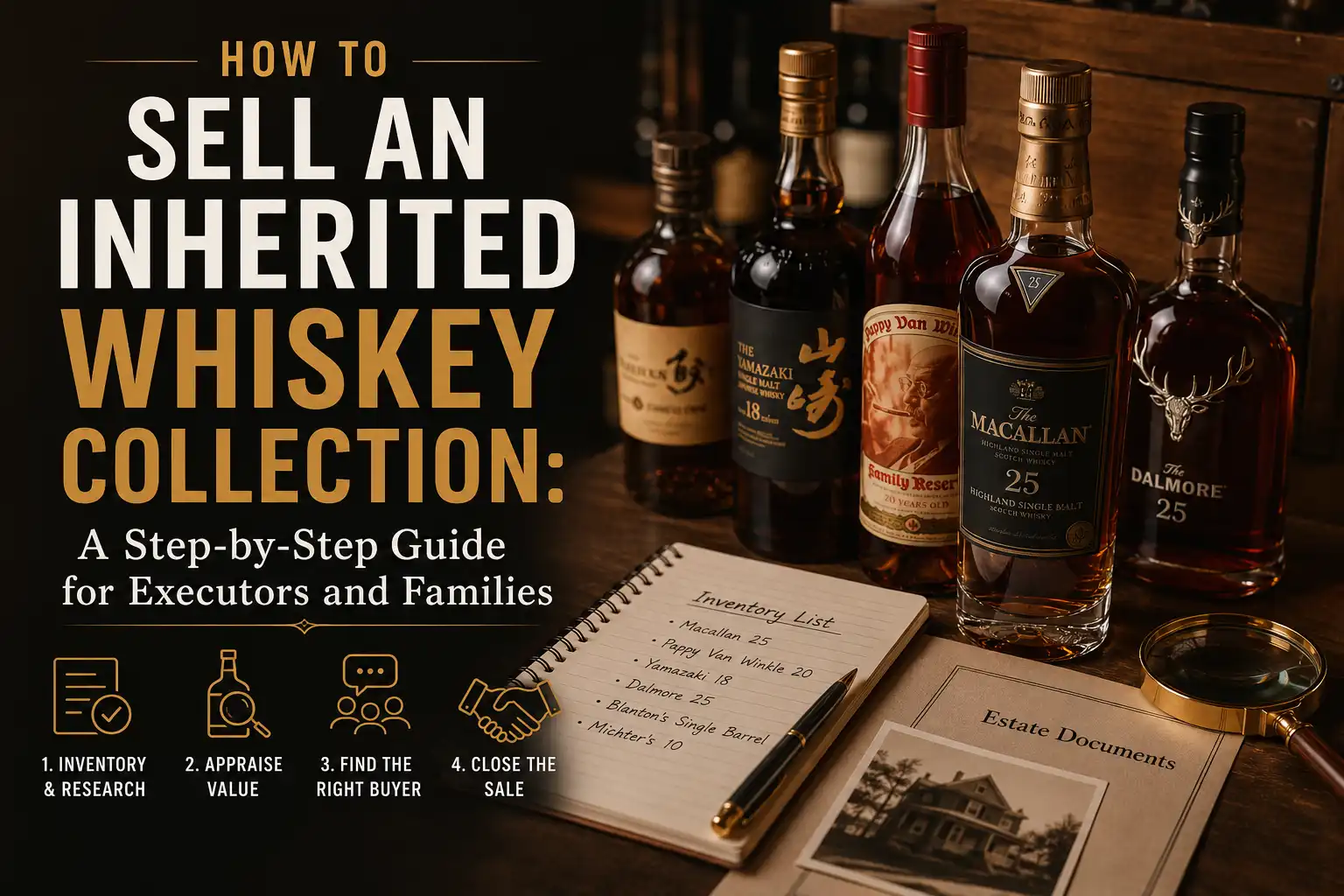
Inherited whiskey bottles are usually worth $50 each, sometimes more, and occasionally a lot more for the right bottle. I've walked dozens of families through this exact situation, and the collections that get the best outcomes are the ones handled in order: inventory first, then valuation, then decide how to sell. Skip a step and you either leave money on the table or end up selling to the first person who asks.
To sell an inherited whiskey collection: (1) inventory every bottle by brand, age, and fill level, (2) get a market-based valuation rather than trusting old price lists, then (3) choose between a direct buyer, an auction house, or an estate sale based on how fast you need to close and how competitive the bottles are.
Step 1: Inventory Before You Do Anything Else
Before you value anything, get a complete, written list. Families lose money at this stage more than any other. Bottles get split among relatives, stored in different houses, or sold off one at a time to whoever asks first, before anyone knows what the full collection is actually worth together.
For each bottle, record:
- Brand and specific expression ("Buffalo Trace" is not the same record as "Buffalo Trace Antique Collection – George T. Stagg")
- Approximate age or release year, if it's on the label or box
- Fill level and seal condition
- Whether the original box, tax strip, or paperwork survived
- Where and how it's been stored since you took possession
A phone photo of each label is enough at this stage. You don't need professional photography to start — you need a complete list so nothing gets sold or given away before it's been looked at.
Step 2: Understand What Actually Drives Value
Age is the factor most families lean on, and it's the least reliable one. In my experience, three other things matter more:
Brand and Distillery Reputation
Pappy Van Winkle, the Buffalo Trace Antique Collection, and older Macallan single malts consistently outperform everything else in this category. A relatively young bottle from one of these names will often outsell an unidentified 40-year-old bottle.
Condition, Not Just Age
This is where inherited collections lose the most value, because nobody was managing them for resale. Check:
- Fill level — a noticeably low fill can cut value significantly
- Label condition — tears, water damage, or fading all reduce it further
- Seal integrity — an opened bottle is generally worth a fraction of a sealed one, though a handful of ultra-rare releases are an exception
Provenance
If you can document where the bottle came from — an original receipt, a purchase date, or how it was stored — that history can meaningfully increase what a serious buyer is willing to pay. Estate collections with a clear chain of ownership are viewed as lower-risk by buyers than bottles with no history at all.
Step 3: Choose How You're Going to Sell
Once you know what you have, the decision comes down to three paths. Each trades speed against ceiling price differently.
Direct Buyer
Best for: Most inherited collections — especially mixed bottles when you want certainty.
Timeline: Offer in 24–48 hours, with payment on pickup.
Trade-off: No bidding war, but you accept one market-based offer.
Auction House
Best for: A small number of exceptional, highly competitive bottles, such as Pappy 23 or rare Japanese releases.
Timeline: Weeks to months.
Trade-off: Potentially higher upside on the right bottle, but with fees, delays, and no guarantee of a sale.
Estate Sale / Estate Liquidator
Best for: Situations where whiskey is only a small part of a larger household estate.
Timeline: Days to weeks.
Trade-off: Convenient when bundled with other items, but whiskey specialists will usually pay more than general estate buyers.
A useful rule of thumb: if a bottle is genuinely rare and you have time to wait for the right bidder, auction can make sense. For everything else — which is most of an inherited collection — a direct, market-based offer gets the estate closed faster with no fees and no risk of the bottle going unsold.
Common Mistakes Executors and Families Make
- Selling to the first buyer who calls. Always compare at least one other opinion, especially on anything that looks rare.
- Pricing off old online listings. Most of what you'll find online is asking price, not what actually sold — it's rarely a reliable number.
- Splitting the collection among family members before it's valued. Once bottles are scattered across households, getting an accurate combined valuation gets much harder.
- Cleaning or "restoring" labels. This almost always reduces value rather than protecting it — leave bottles exactly as found.
- Assuming everything has to go through probate before it can be valued. A valuation isn't a sale — you can usually get a clear read on what a collection is worth while the legal process is still underway.
Expert Tips for Handling an Inherited Collection
- Keep bottles upright, out of sunlight and heat, until you're ready to sell. Never store whiskey on its side the way you would wine.
- Document everything you can before it changes hands: photos, any paperwork, and notes on where it was stored.
- Get a valuation before making any decisions about splitting, gifting, or selling individual bottles.
- If the estate includes even a few well-known names — Pappy Van Winkle, Buffalo Trace Antique Collection, Macallan — treat those bottles separately. They're worth getting a specialist opinion on before anything else.
Also Read
- How Much Is My Old Bourbon Worth
- Antique Whiskey Bottles Price Guide 2026
- Selling Whiskey vs. Auctioning It: Pros & Cons


