

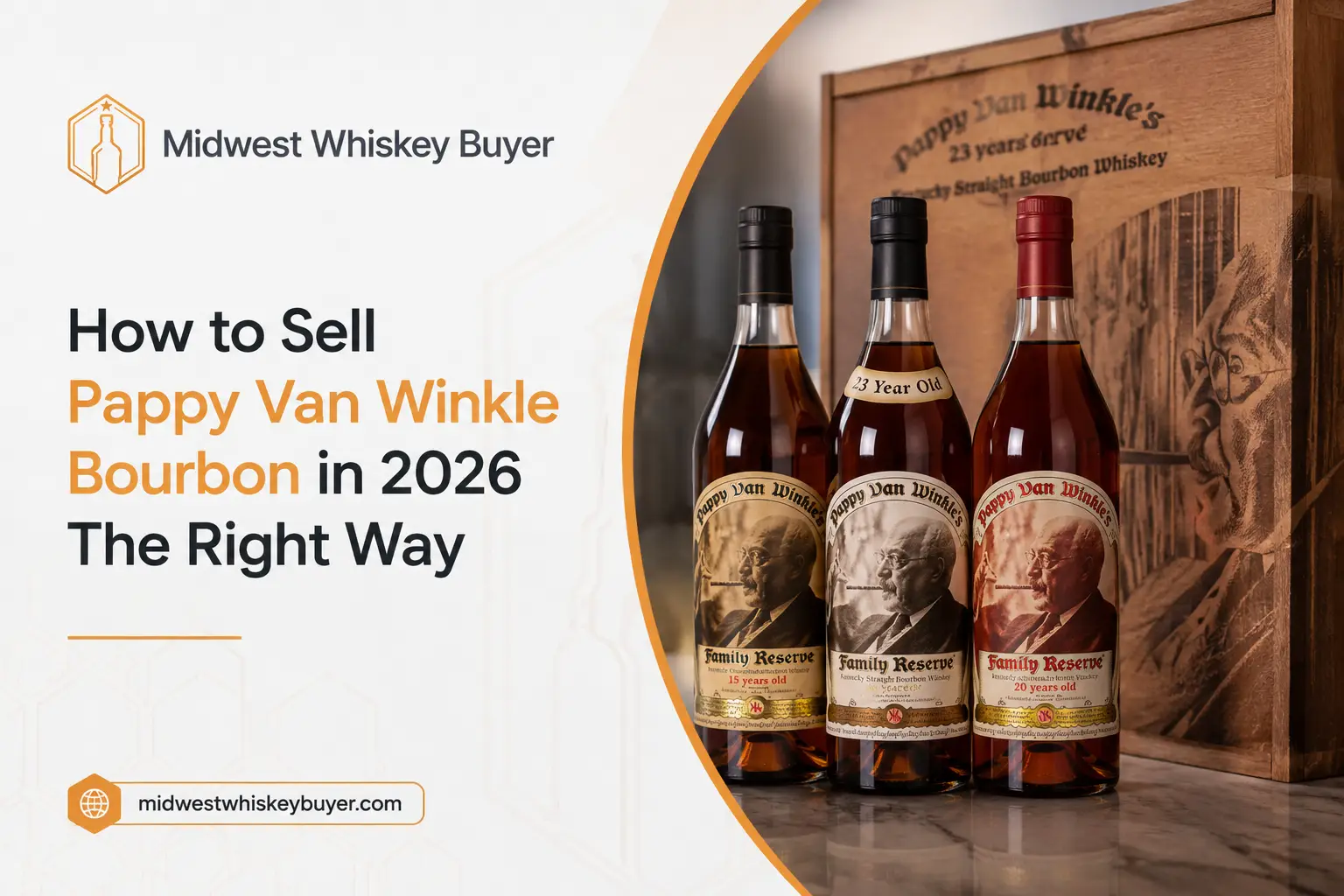
There are bottles. And then there's Pappy Van Winkle.
In the American whiskey world, no name carries more weight in the collector market. Does n't matter if someone has been chasing allocated releases for decades or just stumbled into ownership through an estate when a Pappy Van Winkle bottle enters a conversation, everyone in the room pays attention.
But here's what most sellers don't realize until it's too late. Owning something valuable and actually capturing that value when you sell are two completely different things. The rare bourbon secondary market is active, it moves with the times, and how you approach the sale determines a lot about what you walk away with.
This guide is written specifically for people who are serious about selling Pappy Van Winkle the right way in 2026, understanding what drives the value of your specific bottle, avoiding the mistakes that cost sellers real money, and knowing where to go when you're ready to move.
Why Pappy Van Winkle Commands the Attention It Does
Context matters when you're selling something in a specialized collector market. Understanding why these bottles hold the value they do helps you approach the sale with confidence rather than just hoping for the best.
The Van Winkle family's connection to American bourbon spans generations. Julian "Pappy" Van Winkle Sr. ran the Stitzel-Weller distillery for decades and built a reputation entirely on the quality of what was in the barrel, not production numbers, not marketing campaigns. That philosophy survived the difficult years for the brand and carried directly into the modern Van Winkle lineup, which is now produced at Buffalo Trace Distillery in partnership with the family.
What makes these bottles genuinely scarce is not manufactured hype. Buffalo Trace has real, physical constraints on how much aged stock can go into the Van Winkle expressions each year. The release happens once annually through state lottery and allocation systems, and the number of bottles that reach collectors is a fraction of the demand that exists for them. That gap between how many people want these bottles and how many are actually available is what drives the secondary market, and it hasn't meaningfully closed.
Serious collectors know this. Serious buyers know this. And it means that when you're ready to sell, you're operating in a market where genuine demand exists and where the right approach puts you in a strong position.
The Pappy Van Winkle Lineup What You Need to Know as a Seller
Not all Van Winkle expressions are created equal in the eyes of the collector market. Knowing exactly what you have and what distinguishes it is the foundation of selling well.
Pappy Van Winkle's Family Reserve 23 Year The oldest and most coveted expression in the lineup. The 23 year old sits at the very top of the American whiskey collector hierarchy, full stop. Demand from serious buyers for this expression is consistent and strong, and well-preserved examples with original packaging represent some of the most sought-after bottles in the entire market.
Pappy Van Winkle's Family Reserve 20 Year The 20 year commands enormous collector attention in its own right. It occupies a unique position old enough to carry real weight with serious buyers, and rare enough that demand consistently outpaces availability. If you have a 20 year in good condition, you have something that the market wants.
Pappy Van Winkle's Family Reserve 15 Year Often described as the most accessible entry point into the lineup, the 15 year is still genuinely rare and still commands serious collector interest. Sellers frequently underestimate this expression because it's the youngest of the three Family Reserve bottles. That's a mistake worth understanding before you go to market.
Van Winkle Special Reserve 12 Year Lot B Known among collectors simply as "Lot B," this expression has a dedicated following that exists somewhat independently of the older bottles. It's regularly undervalued by sellers who aren't aware of how the collector market actually treats it. If you have a Lot B, it deserves the same careful approach as the older expressions.
Old Rip Van Winkle 10 Year The youngest expression in the family. Still significantly more sought-after than everyday allocated bourbons and well worth taking seriously when it comes to selling properly.
Van Winkle Family Reserve Rye 13 Year The rye expression from the Van Winkle lineup is consistently overlooked by sellers focused on the bourbon side of the family. That overlooking is exactly what makes it a bottle worth paying attention to. It has a passionate collector following and trades actively in the secondary market in a way many sellers don't expect.
What Actually Affects the Value of Your Specific Bottle
Two sellers can hold the same Pappy Van Winkle expression and receive meaningfully different offers based entirely on the condition of their individual bottle. Here is what an experienced, knowledgeable buyer actually evaluates.
Vintage Year The collector market does not treat all release years identically. Certain vintages have developed stronger reputations either because production was particularly limited that year, because the whiskey received exceptional attention from the collector community, or simply because those bottles have become increasingly difficult to locate. Older releases, particularly those from earlier decades of the modern Van Winkle lineup, carry real premium attention from serious buyers.
Fill Level For a sealed bottle, fill level is one of the clearest indicators of condition and storage quality. A bottle filled to the neck represents the ideal and commands full value. Any meaningful reduction in fill level from evaporation or seepage over time affects the offer, with the degree depending on the expression and how significant the loss is.
Tax Strip and Seal Integrity The tax strip across the cap is a key signal to knowledgeable buyers. Fully intact, undamaged, and clean tax strips indicate the bottle has been handled and stored properly. Any peeling, tearing, moisture damage, or evidence of tampering reduces buyer confidence and the offer accordingly. This is one of the first things a serious buyer looks at.
Label Condition Labels that are fully adhered, clean, undamaged by water, and free from fading or staining represent maximum value. Older vintage bottles naturally show more variation in label condition, and experienced buyers factor that into their evaluation appropriately. Poor label condition is not always a dealbreaker but it is a factor.
Original Box and Packaging Pappy Van Winkle bottles with their original box, tube, or any accompanying packaging are meaningfully more desirable to serious collectors and buyers than bottles sold without them. Collectors who are buying for long-term holding or investment specifically seek complete packages. If you have the original packaging, keep it with the bottle it is part of the value.
Storage History Bottles stored in consistent, cool, dark environments hold their condition better than those exposed to heat, light, or humidity over time. While buyers can't always independently verify a full storage history, the physical evidence of poor storage UV damage to labels, unexpected fill reduction, deteriorated seals tells its own story during evaluation.
The Mistakes That Cost Pappy Van Winkle Sellers Real Money
These aren't abstract warnings. These are patterns that show up consistently among sellers who don't get the value their bottle actually deserves.
Anchoring on Retail Price The suggested retail price for Van Winkle expressions has almost no relationship to secondary market value. Retail is what it costs when it can be found at a store which rarely happens. The collector market reflects entirely different dynamics. Sellers who base their expectations on retail pricing are starting from the wrong foundation entirely.
Going to a Local Liquor Store Retailers who purchase bottles back from sellers are buying inventory to resell. Their margin requirements mean they need to acquire well below what the market will ultimately pay. This is not a criticism of local retailers it's just the economics of their business. For a bottle like Pappy Van Winkle, the difference between what a local store offers and what a specialized rare bourbon buyer offers can be substantial.
Listing on General Resale Platforms Without Market Knowledge General resale platforms can theoretically expose your bottle to a wide audience, but sellers who don't have a firm grasp of current market demand often underprice significantly. The buyers browsing those platforms frequently know the market better than the sellers and they are specifically looking for underpriced bottles. Walking in without current market knowledge is a disadvantage that's difficult to recover from.
Treating All Buyers as Equivalent They are not. A buyer who specializes specifically in rare and allocated American whiskey brings current market intelligence, established collector relationships, and serious purchasing intent to the transaction. A general resale buyer or a platform that handles dozens of different categories does not bring the same depth of market knowledge to a bottle like Pappy Van Winkle.
Rushing the Decision The urgency to sell quickly can lead to accepting the first offer that comes in which is rarely the strongest one. A bottle of this caliber deserves a deliberate approach: document it properly, reach out to the right buyers, and give yourself the space to make a decision from a position of information rather than pressure.
How to Prepare Your Bottle Before You Reach Out to Any Buyer
A few minutes of preparation before you contact a buyer makes a meaningful difference in how quickly you receive an offer and how accurately it reflects your bottle's actual condition.
Take clear photographs in natural light: the front label, the back label, the tax strip, and a fill level shot with the bottle held up to a light source. If you have the original box or packaging, photograph that separately as well. Natural light shows label condition and fill level more accurately than indoor lighting.
Note whatever you know about the bottle's history where it was purchased, how long it's been in your possession, and how it's been stored. You don't need to have an elaborate provenance story. Even basic context about storage conditions helps a buyer evaluate the bottle accurately and get you a stronger initial offer.
If you have more than one Van Winkle expression or a collection that includes multiple bottles, document everything together before reaching out. Collections that include multiple Pappy expressions are of particular interest to specialized buyers and are typically evaluated holistically in a way that serves the seller well.
Where to Sell Pappy Van Winkle Knowing Your Options
Understanding what each selling channel actually delivers matters before you decide where to take your bottle.
Specialist Whiskey Auction Houses Platforms built specifically for rare whiskey can generate competitive attention for Van Winkle expressions. The trade-offs are real though commission structures reduce what you actually receive from the final sale, payment timelines can stretch significantly beyond the auction itself, and there is no guaranteed floor on where bidding lands. For a bottle at the level of Pappy Van Winkle, those commission deductions represent meaningful money.
Online Collector Communities Whiskey collector communities exist across various platforms and peer-to-peer transactions do happen within them. The friction points establishing trust, securing payment safely, navigating authentication concerns make the process considerably less predictable than working with an established buyer. The potential upside has to be weighed honestly against those risks.
Private Specialized Buyers Working directly with a buyer who focuses specifically on rare and allocated American whiskey removes the commission structure, eliminates the waiting period, and puts you in conversation with someone who actually knows what your bottle is worth in today's market. The offer reflects real current demand not the outcome of an auction cycle that may or may not reflect where serious collectors are actually transacting.
For a bottle at the level of Pappy Van Winkle, the buyer you choose matters enormously. This is not a bottle that should be treated as a generic resale item.
Selling Pappy Van Winkle Across the USA
Pappy Van Winkle reaches collectors through state lottery and allocation systems, which means serious sellers are located across the entire country not just in Kentucky where it's made. Whether you're in Illinois, Indiana, Wisconsin, Michigan, Ohio, Tennessee, Texas, New York, Florida, or anywhere else in the United States, the rare bourbon collector market is national and the right buyer reaches across all of it.
Sellers throughout the Midwest have a particular advantage when working with a regional specialist who has deep roots in the collector community here. But the process itself submitting your bottle details, receiving a market-based offer, and completing the transaction works entirely remotely. Your location doesn't need to be a limiting factor when you're working with a buyer built around exactly this kind of nationwide transaction.
If You're Serious About Selling This Is Where to Start
Pappy Van Winkle is not a bottle that benefits from a casual approach to selling. The collector market for these expressions is real, the demand is genuine, and the difference between working with the right buyer and the wrong one shows up directly in what you receive.
At Midwest Whiskey Buyer, rare and allocated American bourbon is exactly what we focus on. The Van Winkle lineup is among the most significant things we work with, and we bring real market knowledge to every single conversation about these bottles.
If you have a Pappy Van Winkle expression and you want to know what it's genuinely worth and what a real offer looks like from a buyer who actually knows this market the next step costs you nothing and takes five minutes.
Submit your bottle details and find out exactly what you have. No pressure, no obligation, no runaround.
Midwest Whiskey Buyer works with rare bourbon sellers across Illinois, Indiana, Wisconsin, Michigan, and nationwide. Rare and allocated American whiskey is our focus not a side category
Tapped: sell whiskey online' /sell-your-bourbon/ /sell-rare-whiskey-online-in-the-usa/
.Also Read: top-10-valuable-whiskey-bottles-you-might-own' /how-much-is-my-whiskey-worth/ /antique-whiskey-bottles-price-guide/ /how-much-is-my-old-bourbon-worth/ /bourbon-oversupply / /where-to-sell-my-whiskey-in-2026 /most-valuable-whiskey-bottles-to-sell / /selling-whiskey-vs-auctioning-it-pros-and-cons/


