

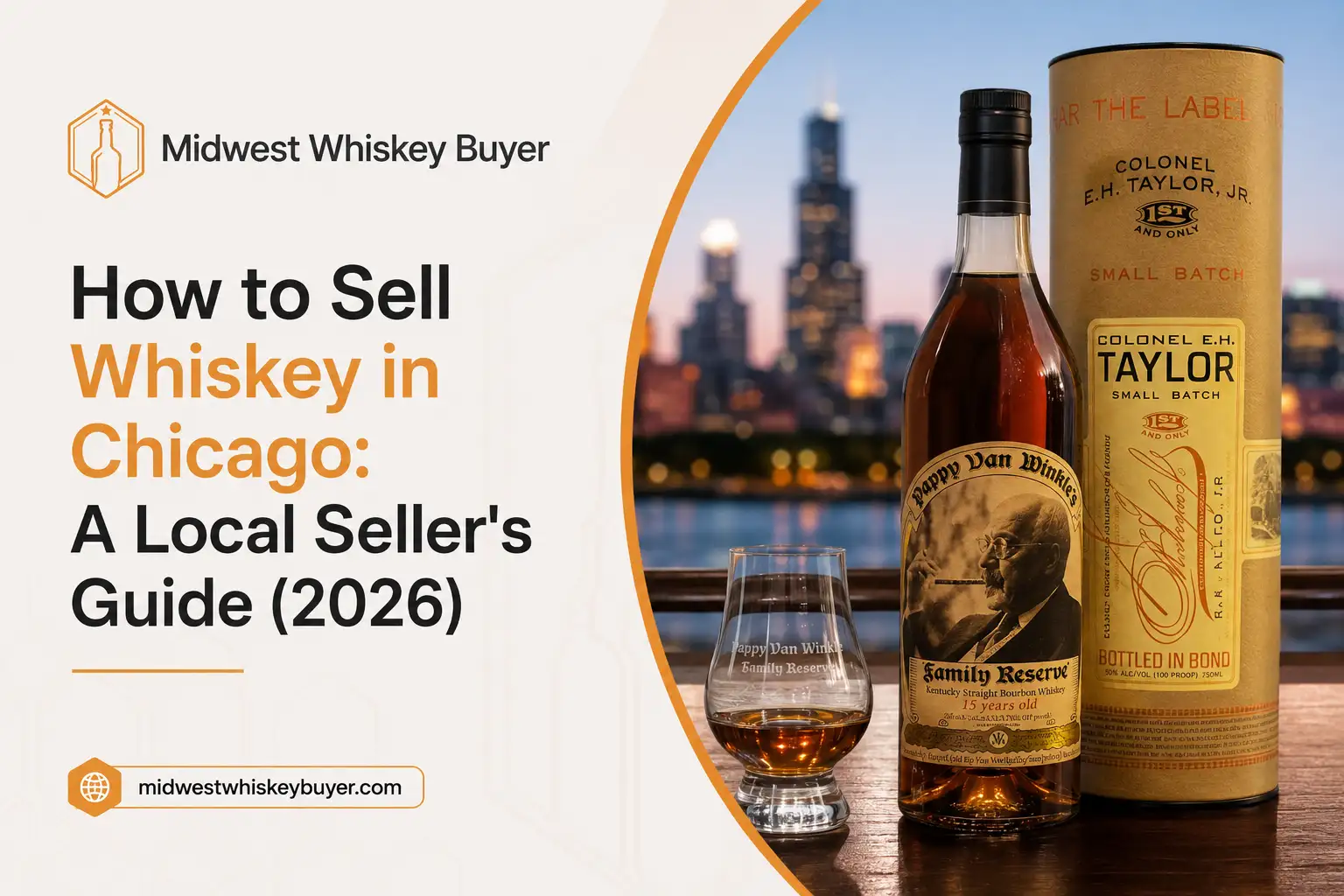
A bottle of Weller sitting in aLincoln Park kitchen cabinet isn't worth the same as the same bottle sitting ina small town three states away. That's not a sales pitch, it's just how secondary markets work. Chicago has one of the densest concentrations of bourbon hunters and scotch collectors in the country, and that demand shows updirectly in what local sellers can get for their bottles.
This guide skips the generic "how to sell whiskey" advice and gets into what actually matters if you're in Chicago: why local pricing runs ahead of the national average, which bottles are worth a phone call right now, and where sellers leave money on the table without realizing it.
Why a Chicago Bottle Sells for More Than theNational Guide Says
Price guides give you a floor, not aceiling. They're built on national averages, and national averages flatten outeverything that makes a specific market hot.
Chicago has two things working in itsfavor at the same time: heavy local consumption and an active trading community. The city's bar and restaurant scene burns through allocated bourbonfast, especially anything from the Buffalo Trace Antique Collection or the Van Winkle line. At the same time, Chicago has one of the largest regional bourbonFacebook and trading group memberships in the Midwest, which means comparablesales data stays current, and buyers are competing for the same bottles you'dbe selling.
When consumption and collecting bothrun hot in the same city, prices hold. That's a real, structural reason a Chicago seller can do better than someone listing the identical bottle in amarket where neither of those things is true.
What's Actually Moving in Chicago Right Now
Not everything in a liquor cabinet isworth evaluating. Here's what's pulling real offers from Chicago buyers andcollectors at the moment:
Allocated bourbon
Pappy Van Winkle, BTAC releases (George T. Stagg, William Larue Weller, Eagle Rare 17), and Blanton's single barrel pulls are the bottlescollectors are actively hunting. Weller Full Proof and Single Barrel move fast,too; they're more accessible than Pappy but still hard to find at retail.
Closed-distillery scotch
Port Ellen and Brora bottlings carry weight with Chicago's scotchcrowd, specifically, this is a knowledgeable buyer base that knows whatclosed-distillery stock actually means for future supply, and they'll pay forit.
Japanese age-stated releases.
Yamazaki 18, Hakushu 18, and Hibiki 21 are still climbing. Thedistilleries that made them have scaled back age-stated releases industry-wide,so existing bottles aren't getting replaced. That scarcity isn't temporary.
Sealed vintage bottlings
Pre-Prohibition and discontinued labels can be worth multiples ofanything printed on the label, if the seal is intact and the fill level holdsup. Condition decides this category more than brand recognition does.
If you're not sure where a bottle inyour collection lands, that uncertainty is normal. Guessing off a price chartis how people undersell. A real evaluation looks at the bottle, not just thename on it.
Where Chicago Sellers Lose Money
Listing on general marketplaces
Facebook Marketplace and Craigslist bring browsers, not buyers whoknow what they're looking at. You're also taking on all the risk of shippingalcohol to a stranger, which can run into legal issues depending on where thebuyer is.
Pricing off the MSRP
Allocated bottles are sold at or near retail through state lotterysystems. What they actually trade for afterward can be three, four, five timesthat number. If you're anchoring to the sticker price, you're alreadyunderselling before a buyer even makes an offer.
No documentation
Original box, tax strip, proof of purchase, all of it supports astronger offer. Sellers who can't speak to any of that tend to get moreconservative numbers back, not because the bottle is worth less, but becausethe buyer has less to verify against.
Informal sales
Private message groups and local classifieds move more slowly than people expect, and they come with real risk: buyers who ghost after agreeing on a price, lowball renegotiation once you've already committed to the deal, no re course if a payment doesn't show up. Illinois also regulates alcohol sales with in state lines, which is one more thing an informal sale doesn't account for and a licensed buyer handles correctly.
What a Real Evaluation Actually Looks Like
If a buyer gives you a number based onthe brand name alone, that's a starting offer, not a real one. A legitimateevaluation accounts for the specific release and age statement, current filllevel and seal condition, label and capsule condition, and recent comparablesales, not a price guide that's a year out of date.
Ask how they got to the number. Abuyer who knows the market will walk you through it without hesitating.
The Bottom Line for Chicago Sellers
Chicago's collector base works in your favor, but only if the offer you're getting reflects current local demandinstead of a flat national number. A bottle that's been sitting untouched for years can be worth real money today. The only way to know is a market-basedread on the actual bottle in front of you, not a guess from a chart.
If you want a straight for ward valuation with no pressure to sell, MidwestWhiskey Buyer works with sellers across Chicago and the surroundingsuburbs. Send photos, get a real offer, and decide from there.
.Also Read: top-10-valuable-whiskey-bottles-you-might-own' /how-much-is-my-whiskey-worth/ /antique-whiskey-bottles-price-guide/ /how-much-is-my-old-bourbon-worth/ /bourbon-oversupply / /where-to-sell-my-whiskey-in-2026 /most-valuable-whiskey-bottles-to-sell / /selling-whiskey-vs-auctioning-it-pros-and-cons/ /how-to-sell-pappy-van-winkle-bourbon /


